A field guide for Cherry Creek condos, townhomes and older houses
Water through a Cherry Creek ceiling: stop the spread, dry it right
Most leaks here start a floor up and run through the ceiling cavity before the first drip. Close the right valve in the next ten minutes, document the damage for every insurer involved, and dry by meter readings, not by look.
Before anyone cuts drywall, ask for proof of IICRC water damage certification, a certificate of insurance and the moisture reading behind each cut.
Unit above
Supply line fails under the sink
Your unit
Stain, drip, then a sag in the drywall
Unit below
Often wet before anyone looks
Where is the water coming from?
The next ten minutes depend on the answer.
- Your unit
Still running, and the source is in your unit
Close the fixture valve or your unit shutoff, often behind a panel near the water heater or under the kitchen sink. Then tell building staff so they check the units below you.
- From above
Still running, and it is coming through the ceiling
Call the building's emergency line first. Only staff can usually close the riser or get into the unit above. Move belongings out from under the drip and catch what you can.
- Stopped
Stopped, but the floor, wall or ceiling stayed wet
Photograph it before moving anything, report it to your insurer and get a moisture inspection within a day. Materials still wet after 48 hours are where mold starts.
If water is near wiring or a ceiling is sagging, leave the room and call 911.
Do these in order
The first hour
Five moves that limit how far the water travels and how hard the claim gets. None of them needs a contractor on site.
-
Close the fixture valve or your unit shutoff if you can reach it safely, then call building staff so they check the floors above and below.
-
If water is near outlets or light fixtures, switch that room off at the breaker. If the ceiling sags, leave the room.
-
Photograph everything before you move it: the ceiling, the floor and the source if you can see it. Every insurer involved will ask for these.
-
Lift rugs, electronics and furniture off wet floors. Slide foil or wood blocks under legs that won't move.
-
Report the loss to your insurer, then call a restoration company you have checked. Extraction and drying are time sensitive.
The stain is in your ceiling. The leak is a floor up.
-
The source is usually a floor up
A failed dishwasher hose, a cracked toilet supply or an overflowing tub on an upper floor sends water along plumbing chases and down shared walls. In a concrete tower it follows the slab to the nearest penetration. In wood frame it soaks straight through. By the time you see a stain, drywall and insulation in two units may already be wet.
-
The wet part is the part you can't see
Insulation above the ceiling, the bottom plate of a wall and the subfloor under hardwood hold water for days after the surface dries. Materials that stay wet past 48 hours are where mold starts, so the stain you can see is the small part of the problem.
-
Drying a stack takes one shared record
Drying a stacked building means finding the source with the building engineer, opening only the cavities that trap water, and logging readings in every affected unit each day. The owners, the association and each insurer then read from one record instead of three.
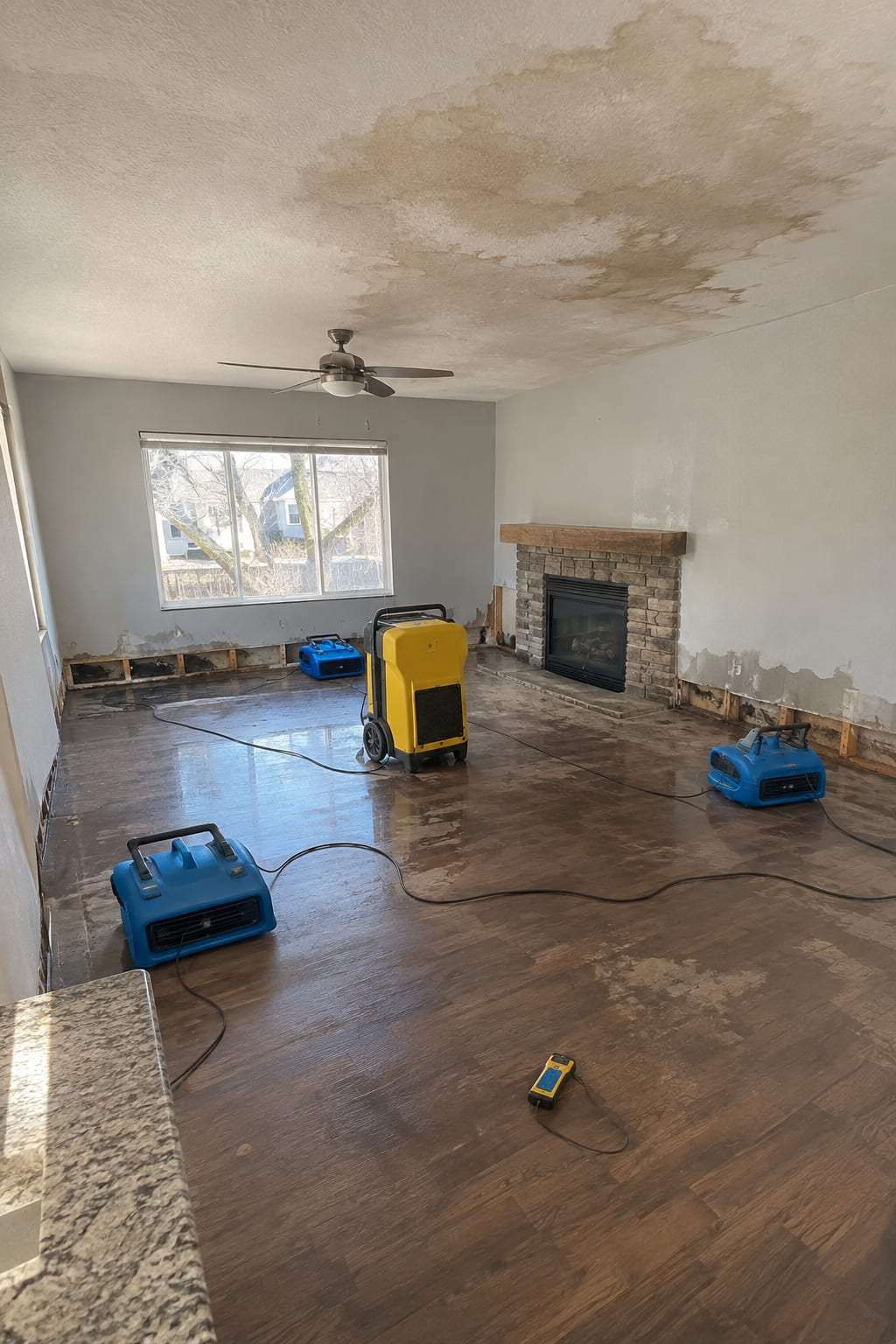
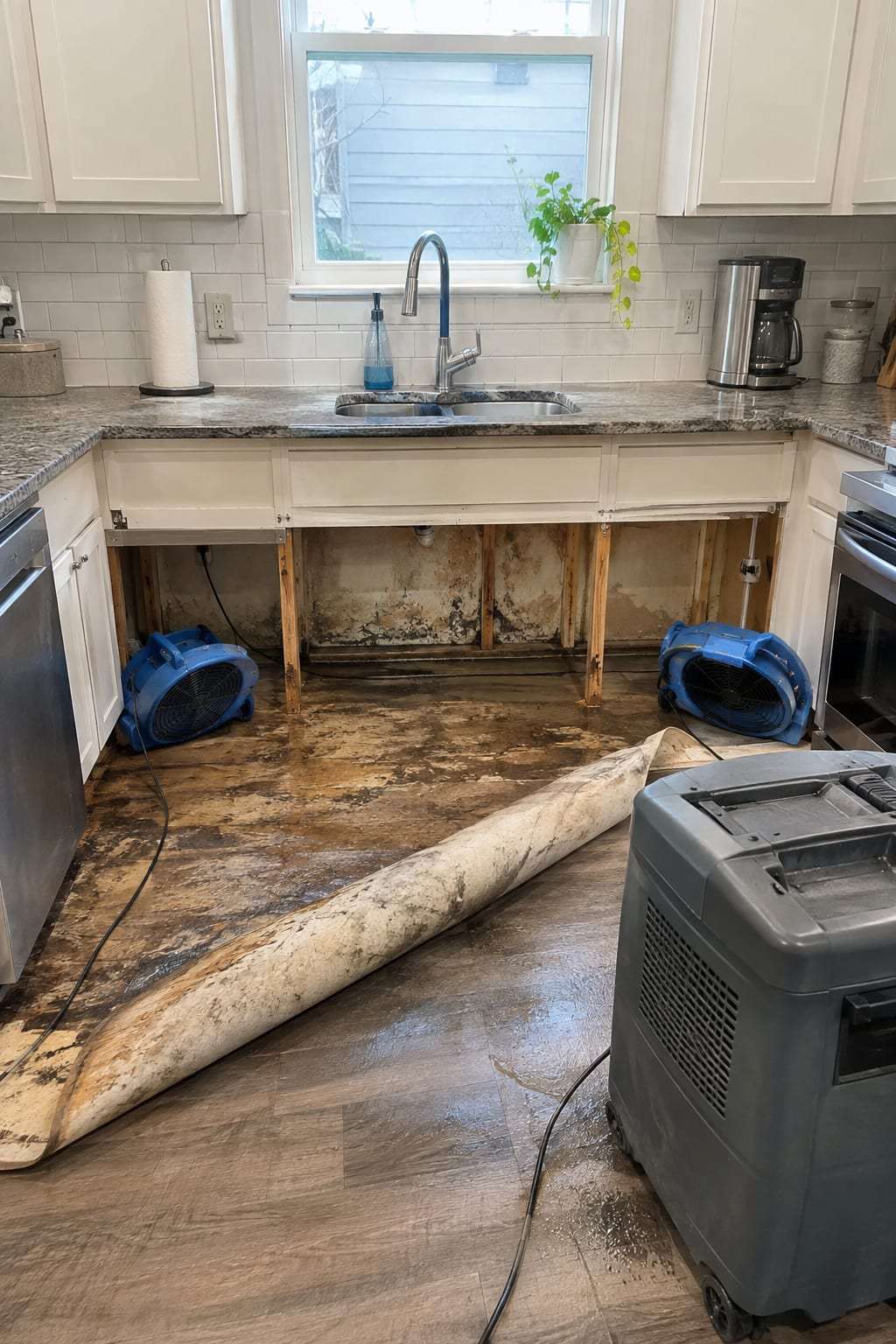
Signs the water went further than the puddle
A mopped floor and a dry-looking ceiling can hide wet framing. Watch for these:
-
A stain, bubbled paint or a sag in the ceiling under an upstairs bathroom, kitchen or laundry.
-
Baseboards pulling away, or a stretch of wall that feels cool and soft next to the rest.
-
Hardwood cupping, or engineered planks lifting at the seams near the leak.
-
A musty smell inside a closet or cabinet that shares a wall with a bathroom or water heater.
-
Water coming back after you mop. That points to an active leak or water trapped above you.
-
Lights flickering or a breaker tripping in the room under the leak. Stay out and cut power at the panel.
Moisture assessment, mapping and drying
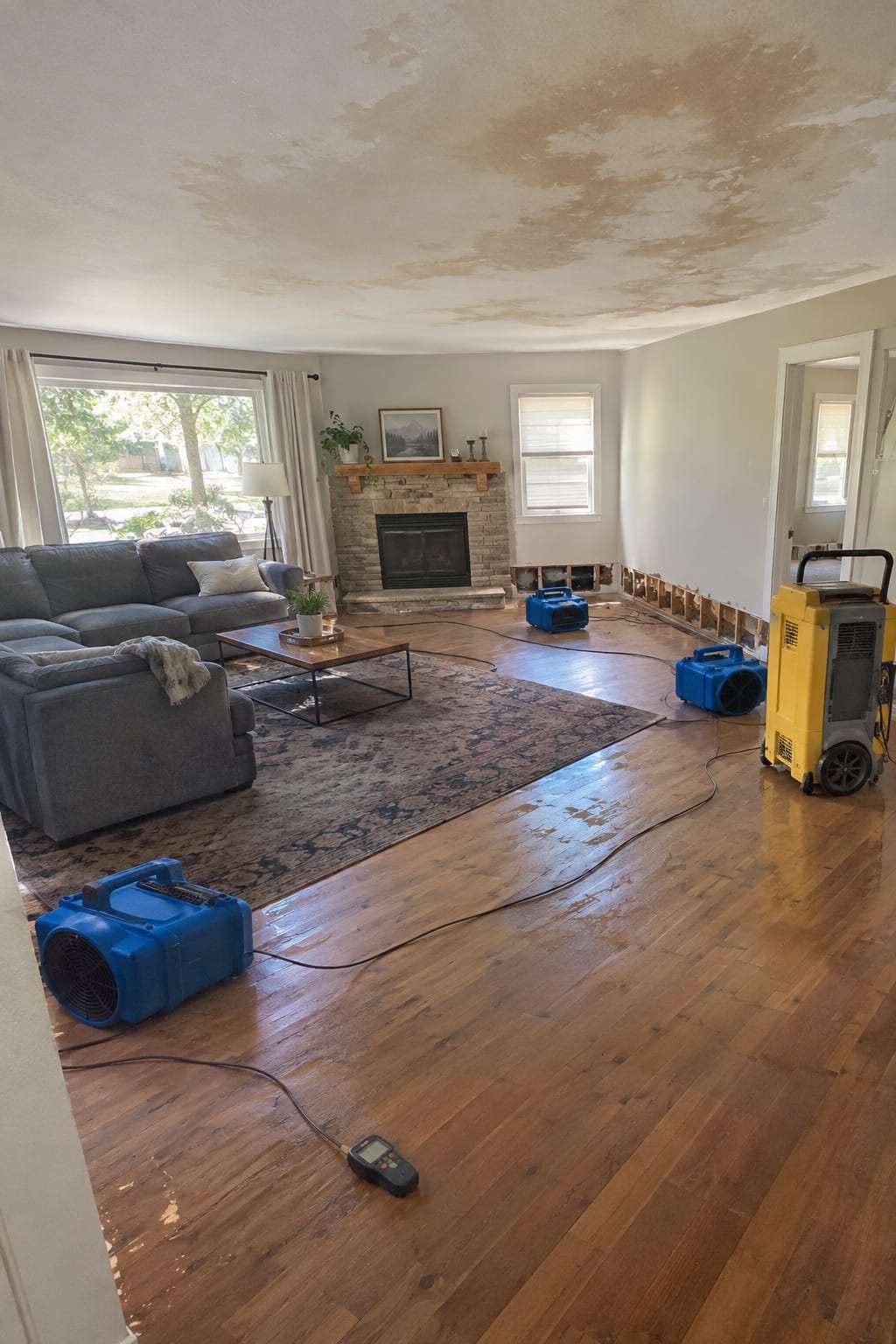
The job ends when the framing reads dry against a dry reference in the same building. That is often days after the surface looks fine. The usual order:
-
Moisture assessment
Confirm the leak is off, check for live wiring and dirty water, then take readings in every room and unit the water could have reached.
-
Water extraction
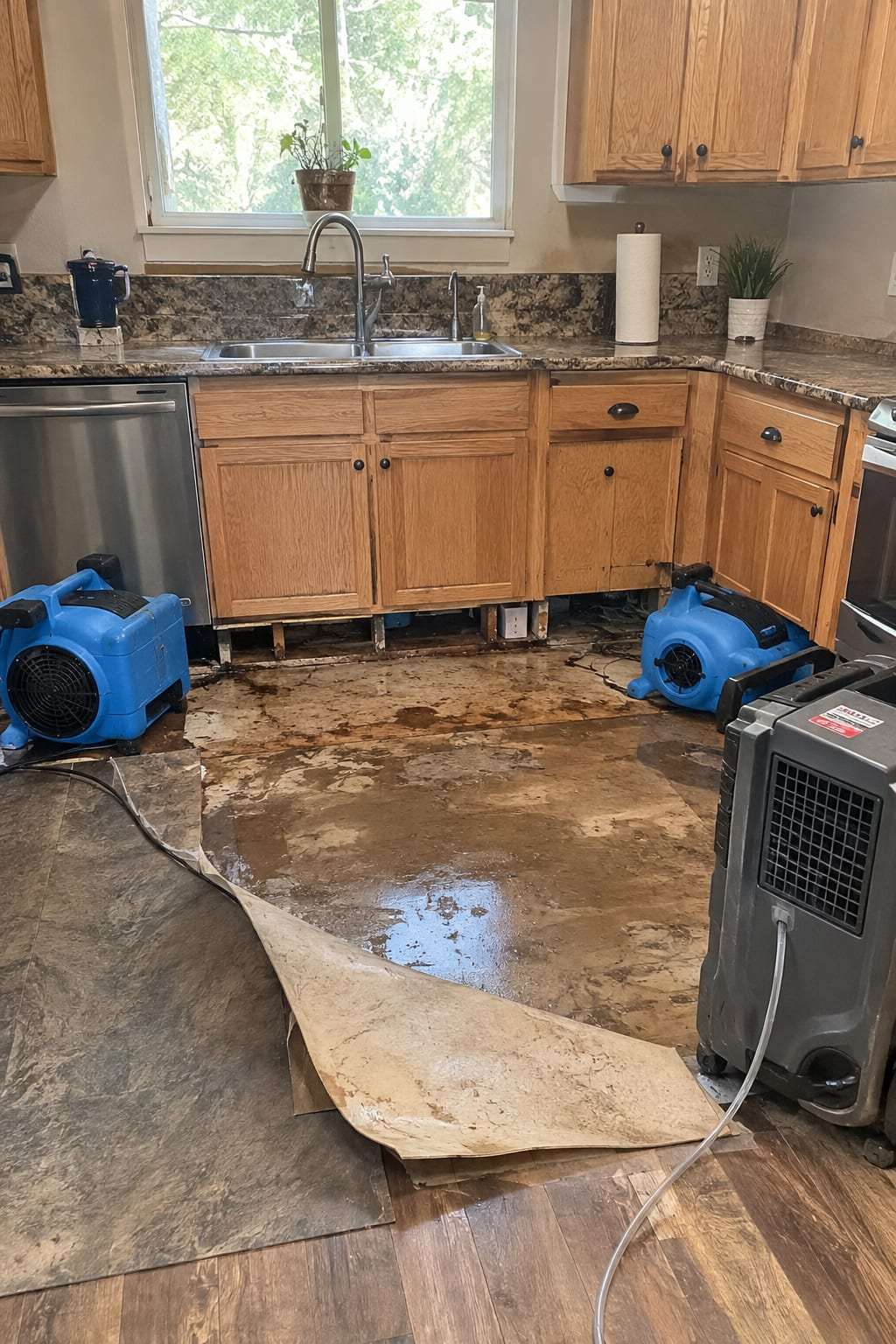
Pull water out of carpet, hard floors and cavities with portable or truck-mounted extractors. Every gallon extracted is a gallon the dehumidifiers don't have to pull from the air.
-
Moisture mapping
Plot the wet area on a floor plan with meters and thermal imaging, so drying and any cuts target only the materials that are wet. Photograph every opening.
-
Structural drying
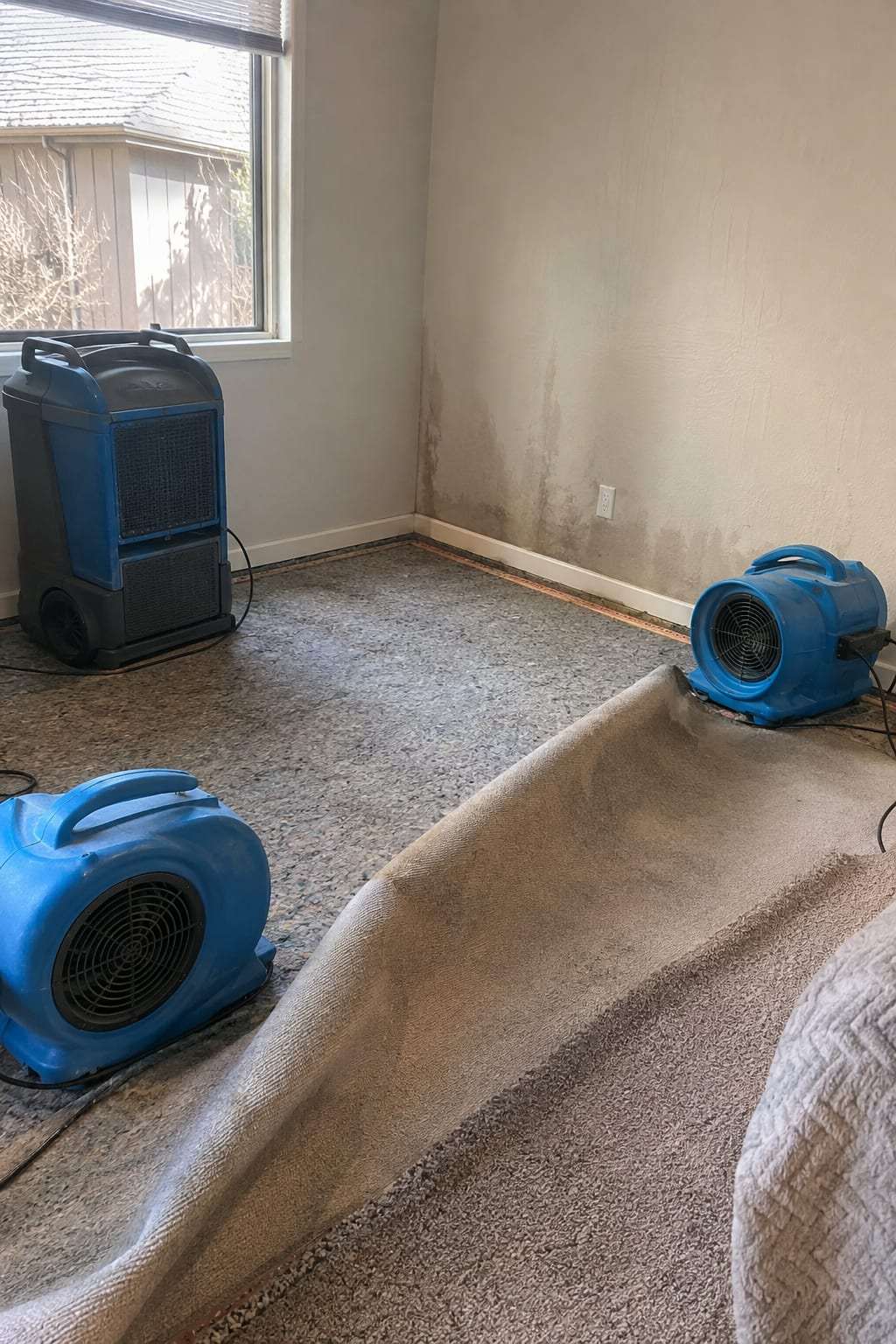
Air movers and dehumidifiers run around the clock while a technician logs readings in each room until materials match the dry reference.
-
Hardwood floor drying
Dry cupped hardwood in place with floor drying mats and controlled dehumidification before anyone talks about replacement. Boards that flatten can often be sanded and refinished.
-
Rebuild and walk through
Replace drywall, trim and flooring, then walk the finished work with you and the building contact.
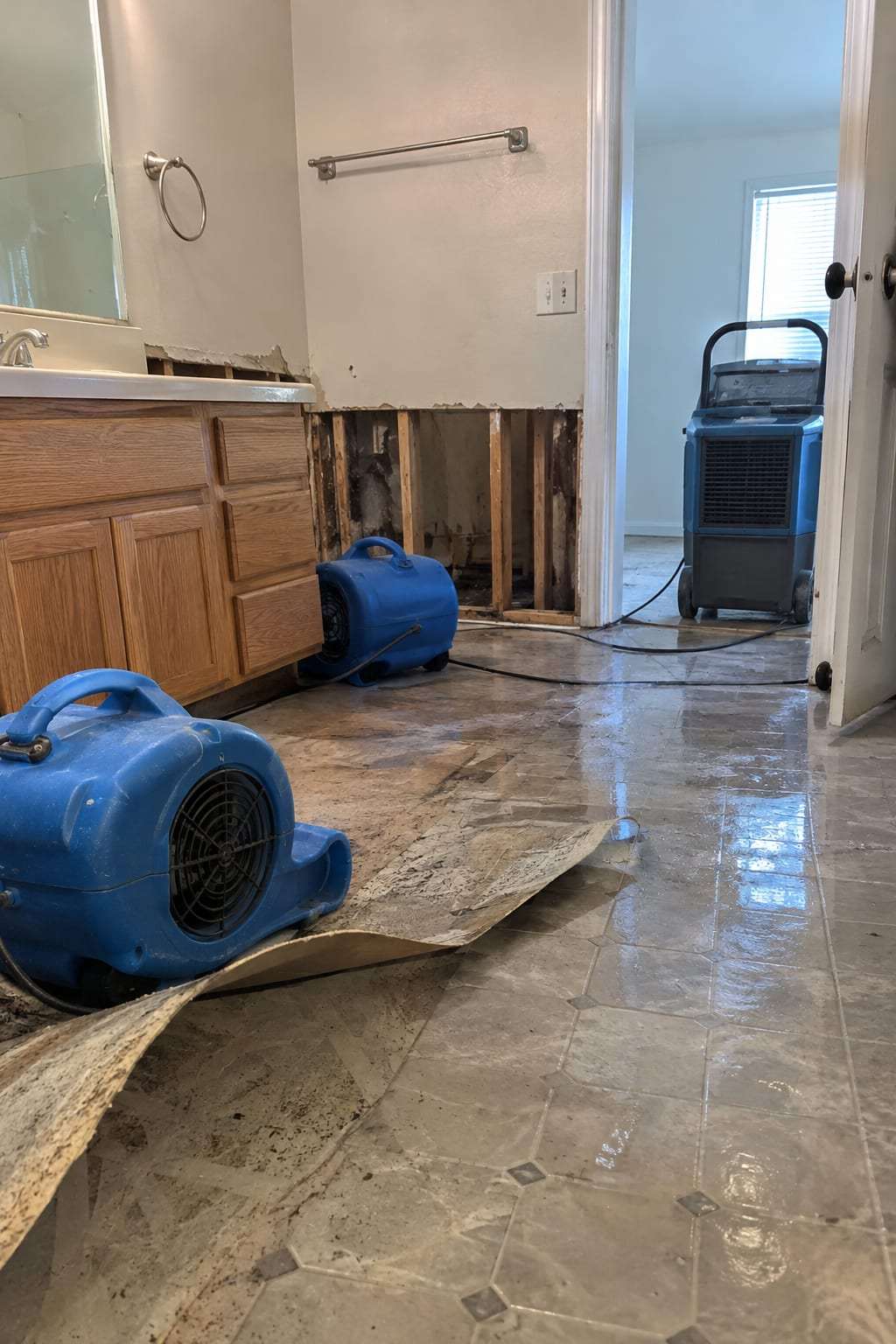
How do you know the walls are dry?
Technicians compare affected materials with unaffected ones in the same building, using moisture meters and thermal imaging. They log readings every day and stop drying only when the wet materials match those dry references.
Ask for the daily log. Each reading should name the room, the material, the meter and the dry reference it was measured against.
A ceiling can look dry and still be wet inside. Meter readings decide when drying stops, not the calendar.
In a condo, two or three insurance policies can touch one leak
Who pays depends on where the water came from and on your association's declarations and bylaws. Neither the restoration company nor this website decides that. Good documentation lets each party sort out its share.
Unit owner
Usually responsible for the inside of the unit through an HO-6 policy, plus the owner's own belongings and upgrades.
Association (HOA)
The master policy usually covers the structure and common elements. The declarations define what counts as common, not the restoration company.
The neighbor whose unit leaked
May be responsible when the leak came from something they own or maintain, such as a supply line, appliance or tub.
Tenants
Renters insurance covers a tenant's belongings. It does not cover the building or the unit's finishes.
Ask any restoration company for an itemized estimate with photos and moisture readings. Many carriers use Xactimate. Coverage decisions belong to the insurers.
For property managers and HOA boards
In a multi-unit loss, crews usually wait on access, not equipment. These five calls let them work every affected unit the same day.
- Authorize entry to the source unit, the units above and below, and any common areas
- Find the riser or unit shutoff before reaching for the building main, which cuts water to every resident
- Tell affected residents when crews arrive and how long equipment will run
- Name one contact for scheduling and approvals so nothing waits in an inbox
- Ask for documentation organized by unit, so each insurer sees only its part
Common water losses in Cherry Creek
| Situation | What it usually involves |
|---|---|
| Leak from the unit above | A failed supply line upstairs runs through the ceiling cavity and down a shared wall. Both units need moisture mapping and drying. |
| Dishwasher or ice maker line under hardwood | A slow drip under a kitchen island can go unnoticed for days until boards cup. Moisture mapping shows how far it spread under the floor. |
| Water heater failure | A tank in a utility closet fails and soaks carpet in the rooms around it and any finished space below. |
| Leak in a vacant unit | Water can run for days in an empty unit before building staff find it, so access and drying are arranged remotely. |
Towers, townhomes and 1920s houses in one neighborhood
Cherry Creek changed fast. Mid-rise and high-rise condominiums now fill the blocks around the shopping district, and duplexes and townhomes have replaced many older houses in Cherry Creek North. Nearby Country Club and Hilltop still hold houses with plaster walls and boilers. A water loss here often involves a homeowners association, a building manager and more than one insurance policy.
Associations usually carry a master policy for common elements, and owners carry their own coverage for the interior. The governing documents and the source of the leak decide which policy responds. A restoration company can't decide coverage, but it should hand adjusters and managers the moisture readings, photos and itemized estimate they ask for. Many carriers use Xactimate.
Go deeper on leaks in shared buildings
Guides, tools and area notes for condo owners, renters and building managers.
- Guides
One problem per page, taken from Cherry Creek's towers, townhomes, prewar houses and storefronts.
- Tools
Print these or keep them open on your phone while a loss is underway.
- Areas
The neighborhoods around Cherry Creek went up in different eras, from Country Club mansions with boilers and plaster to Belcaro's postwar brick ranches and Glendale's apartment blocks.
Describe what's leaking
This form is not connected. This website is a draft preview: no business has been confirmed to receive requests, so the fields below are switched off and nothing can be sent. In an emergency, call 911.
Frequently Asked Questions
Who pays when water comes from the condo above mine?
It depends on your association's governing documents, the cause of the leak and the policies involved, which can include the association's master policy, the upstairs owner's policy and your own HO-6. Report the loss to the association and your insurer promptly. A restoration company can document the damage in the format adjusters use. It does not decide coverage.
Can wet drywall be dried in place, or does it have to be replaced?
Drywall soaked with clean water can often dry in place if drying starts fast and the board hasn't lost strength. Board that sags, crumbles or got wet from dirty water usually comes out. Moisture readings decide which, not appearance.
How do you know the walls are dry?
Technicians compare affected materials with unaffected ones in the same building, using moisture meters and thermal imaging. They log readings every day and stop drying only when the wet materials match those dry references.
How long does structural drying usually take?
Many clean-water losses dry in three to five days. How long the water sat, the materials involved and the airflow in the space all change that. Hardwood and layered floors usually take longer.
Do I need to be home while equipment runs?
Usually not. The equipment runs around the clock, and a technician returns to take readings and adjust it. Someone has to let them in for those visits, and building staff can sometimes handle that.
Will the drying equipment trip breakers in my unit?
Air movers and dehumidifiers draw a lot of power. Technicians plan circuit loads before placing equipment and will ask about your panel, especially in older or smaller units.
Can the drying company also handle the repairs?
Some restoration companies rebuild as well as dry, replacing drywall, paint and flooring once the structure is dry. Others hand off to a contractor. Ask which applies, and get the repair scope in writing separately from the drying.
The leak came from the unit above me, but nobody is home. What can I do?
Call the property manager or HOA right away. They can usually authorize emergency entry. While access is arranged, protect your belongings, take photos and start extraction and drying in your own unit with a restoration company you have checked.
Water coming through your ceiling right now?
Stop the source if you can reach it, call building staff, photograph the damage and report it to your insurer. Then call a restoration company you have checked. If water is near wiring or the ceiling sags, leave the room and call 911.